


Burkina Faso

CRS in Burkina Faso
Burkina Faso is a landlocked country lying in the semi-arid Sahel and Savanna zones of Africa. About 80% of the working population relies on agriculture and livestock rearing to make their living. Most farmers here operate at a subsistence level, and thus remain vulnerable to changes in rainfall (flooding and droughts). As the country develops, it continues to face major challenges including low levels of education (for all children but especially for girls), poor healthcare (especially for pregnant women and children), and weak, uneven levels of economic development which often exclude women and the poor.
Historically one of Africa’s most stable nations, Burkina Faso recently underwent a period of political transition following the resignation of long-term President Blaise Compaore in October 2014, and the country’s democratically elected government came to power in December 2016. Rising insecurity has led to the internal displacement of 100,000 people.
A partner in Burkina Faso’s development since 1960, CRS works with the government, local partners and other members of civil society to address major development challenges through improving agriculture, livelihoods, nutrition, WASH, and education.
Our partners include, national: Catholic Organization for Development and Solidarity (OCADES) Caritas Burkina Faso; National Union of Burkina Cotton Producers (UNPCB); Ministry of Youth and the Promotion of Entrepreneurialism for Youth; Ministry of Education, Literacy and the Promotion of National Languages; Ministry of Agriculture and Irrigation; Ministry of Water and Sanitation; Ministry of Women and Family Affairs, Humanitarian Response and National Unity. International: Growing hope worldwide (FRB); Rise Against Hunger; The Leona M. and Harry B. Helmsley Charitable Trust; US Department of Agricultural Services-McGovern Dole International Food for Education and Child Nutrition; US Department of Agricultural Services- Food for Progress; US Department Bureau of Population, Refugees and Migration.
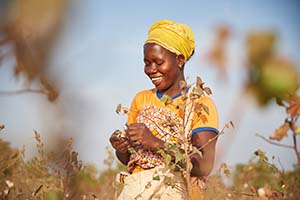 Organic Cotton Farming
In Burkina Faso, CRS empowers more than 8,300 organic cotton farmers – helping them increase their income while supporting the national farmers’ union to find buyers and promote trade. See how this program is transforming organic cotton farming across the country.
Photo by Sam Phelps for CRS
Stats
People Served: 1,174,777
Population: 19,742,715
Size: 105,869 sq mi; slightly larger than Colorado
Our Partners
Become a Partner ›Country News and Stories
-
November 19, 2019
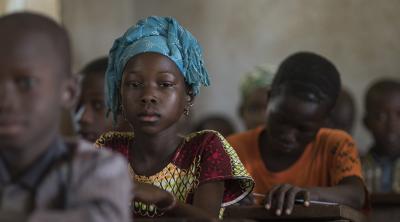
CRS Supports Church Leaders Across the Sahel to Address Growing Violence and Unrest
Gathering of Church leaders highlights urgent need as millions face a humanitarian crisis
-
September 12, 2019
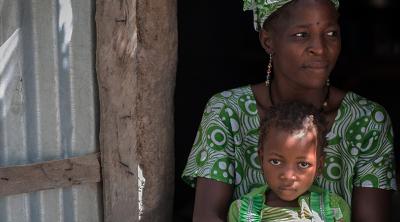
CRS Responds to Increasing Violence and Displacement in the Sahel
CRS has launched emergency response in region, providing clean water, food, shelter
-
March 8, 2018
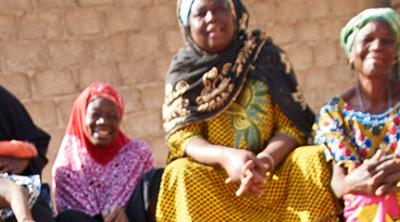
CRS Microfinance Capacity Statement
During its decades of microfinance practice, CRS has focused on serving the poorest of the poor, primarily women and vulnerable populations living in remote rural communities for whom the cost of accessing financial...
-
October 23, 2015
Our Abundant Thanks
Our work is possible thanks to a cornucopia of riches.

CRS' History in Burkina Faso
Catholic Relief Services (CRS) was established in Burkina Faso in 1960, following the invitation of the country's bishops. As the first and longest-standing international development organization in the country, CRS began its work by providing humanitarian and food aid to Burkina Faso shortly after its independence from France. In 1962, CRS expanded its mandate, providing education assistance, especially school feeding. Current programs include education, agriculture, health/nutrition, WASH, emergency response, support to Malian refugees, and savings-led microfinance with an annual budget of $10 million.
View Another Region or Country
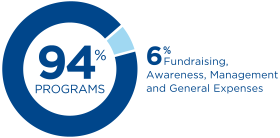
2023 Operating Expenses
Recognition
Trusted by charity rating agencies:



©2024 Catholic Relief Services228 W. Lexington St. Baltimore, Maryland 21201-3443877-435-7277[email protected]
Catholic Relief Services is a 501(c)(3) non-profit organization; Donations to CRS are tax-deductible to the full extent allowable under the law.
Catholic Relief Services eases suffering and provides assistance to people in need in more than 100 countries, without regard to race, religion or nationality.


We are the official overseas relief and development agency of the United States Conference of Catholic Bishops and a member of Caritas Internationalis.