
Hispanic Heritage Month History in the United States
By Mariana De MaioEach year, the United States honors the contributions that Latinos have made to our country with a Hispanic Heritage Month celebration that runs from September 15 to October 15. This annual celebration began 21 years ago, but its inception stretches back farther into our history. Congress first passed a resolution to celebrate Hispanic heritage at the national level as a weeklong event on September 17, 1968. Nearly 20 years later, on August 17, 1988, President Ronald Reagan stretched the celebrations to a month, from September 15 to October 15.
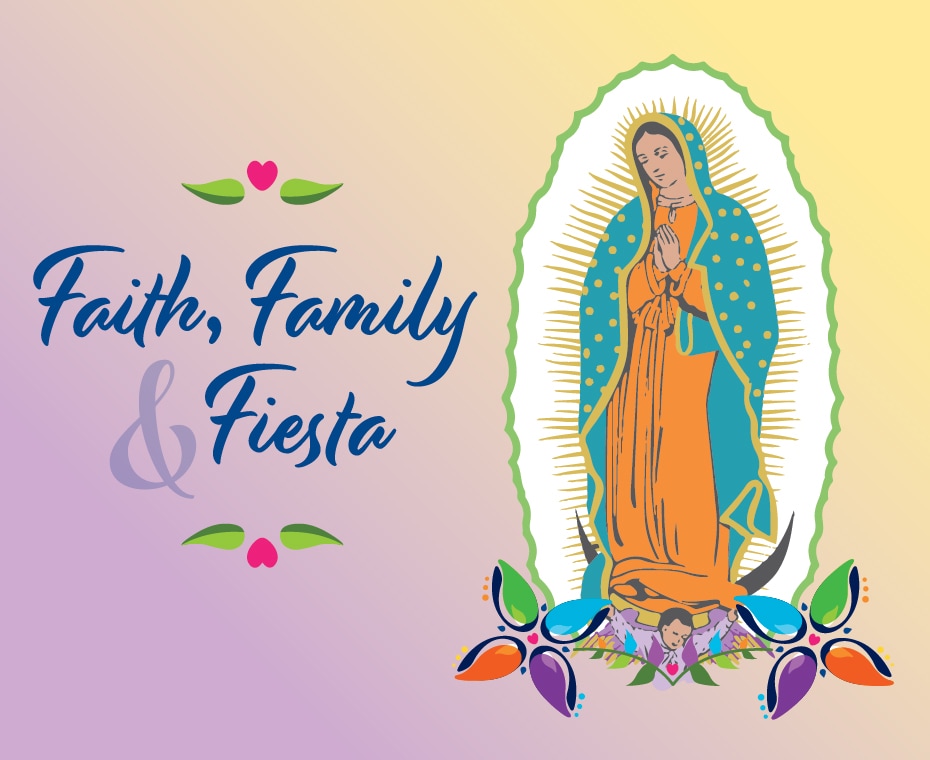
Artwork by Guy Arceneaux/CRS
September 15 was chosen as this celebration's start date in order to coincide with the Independence Day celebrations of five Latin American countries: Costa Rica, El Salvador, Guatemala, Honduras and Nicaragua. In addition, Mexico and Chile observe their independence on September 16 and September 18, respectively.
This commemorative month honors the influence and impact of Hispanics in all spheres of U.S. society, including science, art, politics, culture and the economy. Catholic Relief Services recognizes that more than 39 percent of U.S. Catholics are Hispanic and is honored to join in celebrating and paying tribute to the diversity of cultures and accomplishments within the Latino community. The support of Latinos is crucial to our work as the official international humanitarian agency of the U.S. Catholic community.
Throughout the history of CRS, our agency has been intimately linked with Latin America. In fact, our very first project in 1943 began south of the U.S. border when Colonia Santa Rosa, in Guanajuato, Mexico, gave shelter to 709 Polish refugees that we helped place. This began a shared history that continues more than 65 years later. Then, as now, our mission was to assist the poor and suffering on the basis of need, without regard to creed, race or nationality.
Throughout the history of the United States, people have come from various parts of the globe and have contributed to build this nation where we live today. Commemorating Hispanic Heritage Month gives us an opportunity not only to feel proud of our roots, but also to educate those who are not Hispanic about the richness and diversity of the various Latin American cultures.
Some Interesting Statistics*
- Hispanics make up 15 percent of the nation's total population, about 46.9 million (as of July 1, 2008), making people of Hispanic origin the nation's largest ethnic or race minority. In addition, there are approximately 4 million residents of Puerto Rico.
- More than half of all people added to the U.S. census between July 1, 2007, and July 1, 2008, was Hispanic. That's 1.5 million Hispanics added to census.
- There was a 3.2 percent increase in the Hispanic population between July 1, 2007, and July 1, 2008, making Hispanics the fastest-growing minority group.
- Projections indicate that by July 1, 2050, there will be 132.8 million Hispanics in the United States. That means Hispanics will make up 30 percent of the nation's population.
- In 2008, the United States' Hispanic population ranked second in the world. Only Mexico (110 million) had a larger Hispanic population than the United States (46.9 million).
- In 2007, 64 percent of Hispanics in the United States were of Mexican origin. Another 9 percent were of Puerto Rican background, 3.5 percent Cuban, 3.1 percent Salvadoran and 2.7 percent Dominican.
- In 2008, 25 percent of children below age 5 and 22 percent under 18 were Hispanic.
- There are 16 states with at least a half-million Hispanic residents: Arizona, California, Colorado, Florida, Georgia, Illinois, Massachusetts, Nevada, New Jersey, New Mexico, New York, North Carolina, Pennsylvania, Texas, Virginia and Washington.
- In 2007, 35 million U.S. residents age 5 and older spoke Spanish at home. Those who speak Spanish at home constituted 12 percent of U.S. residents. More than half of these Spanish speakers spoke English "very well."
- In Arizona, California, New Mexico and Texas at least one in five residents spoke Spanish at home in 2007.
- In 2007, 78 percent of Hispanics 5 and older spoke Spanish at home.
- Four Hispanic last names were among the 15 most common names in 2000. It was the first time that a Hispanic surname reached the top 15 during a census. García was the most frequent Hispanic last name, occurring 858,289 times and placing eighth on the list—up from 18th in 1990. Rodriguez (ninth), Martinez (11th) and Hernandez (15th) were the next most common Hispanic last names.
*U.S. Census Bureau statistics
Mariana De Maio is the Hispanic outreach multimedia editor and coordinator at Catholic Relief Services, based at our headquarters in Baltimore, Maryland.